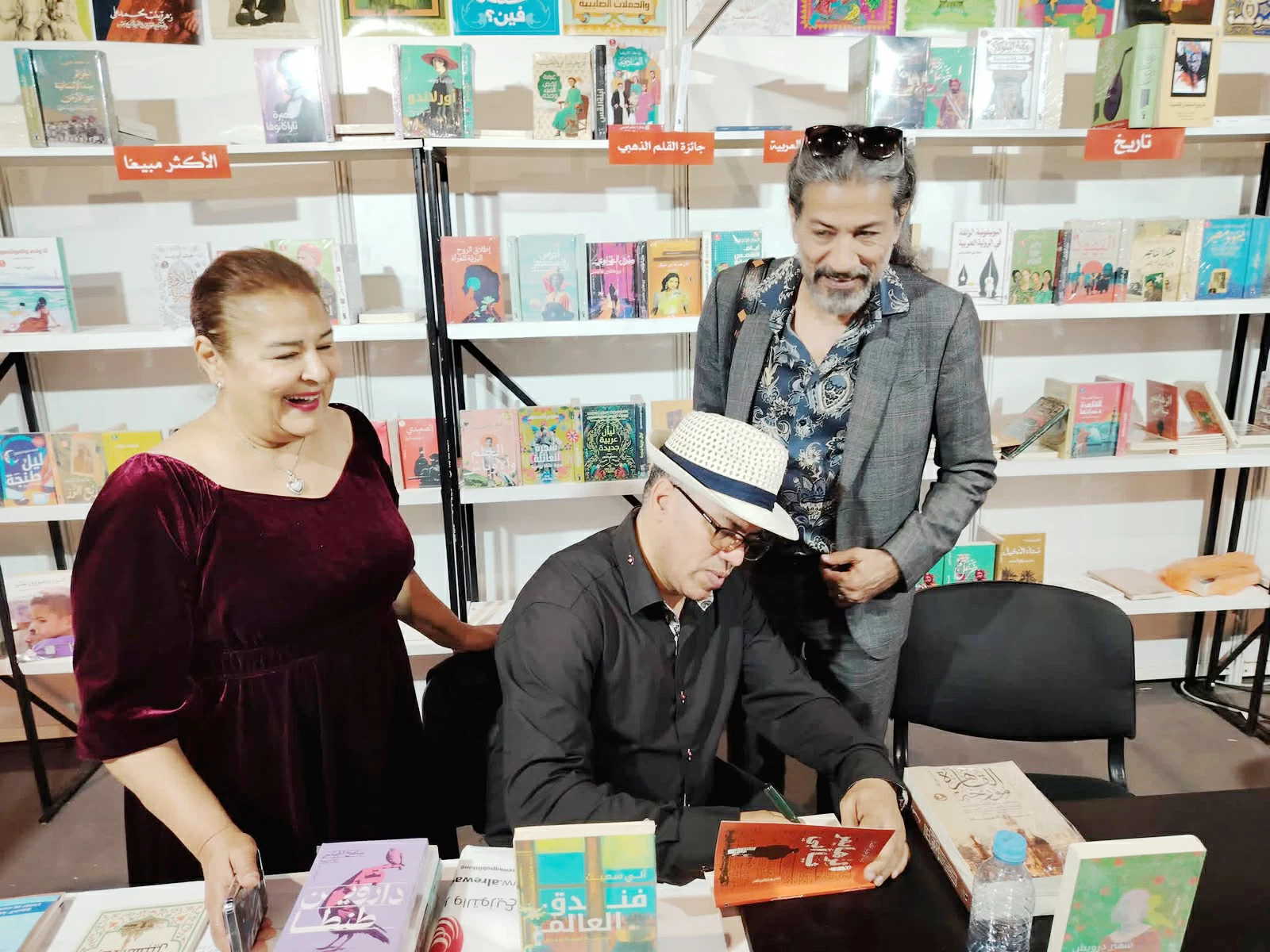
يسكنني اسم الكاتب عبدالرحيم الخصار منذ قرابة رُبع قرن، وحضر نصّه الذي ينبئ عن شخصه عبر المنتديات التي جمعت بين مشرق العرب ومغربه، وتلاقت فيها الأرواح، وانفتحت العلاقات. وظلّ اسم الضيف حاضراً في الوعي الذي لطالما حدّث نفسه بالقبض عليه، إلا أن عملنا في الصحافة باعدَ بين أسفارنا واهتماماتنا، لكنّ اللاوعي يعود بنا إلى من يثق بأنه شخصية وازنة ولها حق إيلائها شيئاً من العناية، فكان هذا الحوار الذي ربما لامس منكم ما لمس الوجدان منذ 25 عاماً، فإلى نصّه:
• كتابك الأحدث «ألزهايمر يا أبي» ترجمة لتجربة حقيقية.. ما مخاض ولادة هذا الكتاب؟
•• في الفترة الأخيرة من حياته، خاض والدي تجربة مريرة استمرت خمس سنوات مع الـ«ألزهايمر» قبل أن يرحل عن عالمنا. بدأت الطرقات تتقطع بيننا وبينه، ثم غاب الفهم والإدراك، كأنما أصبح هو في عالم ونحن في عالم آخر، وفي غياب هذا التواصل تحولت إلى الشعر؛ أردت أن يستمر الخطاب، أن أخاطبه شعرياً. لذلك يحاول الكتاب استحضار مقاطع متفرقة وكثيرة من حياته، وحياتنا معه. مرض الخرف تجربة مريرة، الكتابة عنه تجربة مريرة أيضاً. مفهوم النسيان يتخذ أبعاداً أخرى مؤلمة، خصوصاً حين يكون الناسي هو الأب والمنسيون هم نحن.
• لماذا الكتابة؟ متى سألتَ نفسك هذا السؤال؟
•• في منتصف التسعينات، نشرت مقالاً يجيب فيه كُتّاب العالم عن هذا السؤال: لماذا الكتابة؟ كانت أجوبتهم جميعاً مذهلة وعميقة، لكنها كانت بالنسبة إليّ غير مقنعة. لا أحد يعرف لماذا يكتب. هل ثمة جواب جاهز؟ كل جواب هو إخفاء لأجوبة أخرى. أنا أعرف ماذا أكتب وكيف أكتب.. لكن لماذا؟ لا أعرف لماذا. وإذا حاولت أن أجيب فستكون هناك إجابات كثيرة ومتضاربة أحياناً.
في أحد نصوصي قلت مرة: «أكتب كمن يشرب النبيذ لينسى/ وكمن يشرب القهوة ليصحو».
هل نكتب لنتذكر أم لننسى؟ أحياناً يكون الطرفان معاً جواباً واحداً.
مرة قلت: «أكتب لأن حبل الأيام قصير». هل الكتابة نزوع نحو الخلود؟ ربما. لكن عن أي خلود نتحدث نحن الكائنات الضئيلة في هذا الكون الجارف؟
• ماذا عن تأثير الجينات الوراثية؟
•• أدبياً؛ أنا ابن قراءاتي الشاسعة للأدب. تأثرت بسيَر الشعراء أحياناً وعذاباتهم أكثر من نصوصهم.
بيولوجياً؛ أنا ابن صانع بنادق بارود، رجل وطني مؤمن كريم ومحب للخير. ورثت عنه حب الشاي والحكي والسخاء وعزة النفس. أنحدر من قبائل آيت باعمران الأمازيغية، الشهيرة بمقاومة الاستعمار. إنني حفيد جبال وصنو حقول وأفلاج، لذلك تحضر مفردات الطبيعة والأرياف على نحو كبير في قصائدي.
• ما الذي تشعر به اليوم إثر مرور ثلاثة عقود من الكتابة والنشر والعمل الصحفي؟
•• بدأت الكتابة في الطفولة، في عمر مبكر جداً، في السنة الخامسة من التعليم الابتدائي، حصلت على جائزة أفضل نص أدبي في المدرسة، كانت مزهرية زرقاء طويلة جداً، أطول من قامتي.
ذلك الضوء الخزفي الأزرق ظل يلمع لسنوات متعاقبة في ذاكرتي.
أصدرت 15 كتاباً في الشعر والرواية وأدب الرحلة. وكتبت نحو 1000 مقال في الصحافة العربية، ربما تبدو هذه الأرقام كبيرة لكثيرين، لكنها بالنسبة إليّ لا شيء، لم أكتب بعد ما أريد، ولم أصل بعد إلى الأعماق التي أنشدها.
• هل حقاً يشعر الكاتب في مطلع كتابته أنه يستطيع تغيير العالم؟ وما الذي أعقب الانخراط في العمل.. هل نجحت في تغييره؟
•• في أول الطريق، طريق الكتابة، يبدو كل شيء ممكناً، يبدو العالم مروحة صغيرة في قبضة اليد، مع تعاقب السنوات والعقود يكتشف المرء أنه كائن هش جداً أمام قسوة العالم، يختبر هشاشته ويهرع إلى السكينة. لكن علينا أن نترك أثراً على هذه الأرض قبل أن نغادرها، ولو كان أثر عصفور في مفازة.
• ماذا تقول عقب هذا المشوار لمن أقحمك في هذا العالم؟
•• لا أحد أقحمني في هذا العالم. ثمة نهر هائل وعظيم وجدت نفسي فيه، وقد سرني جداً أن أكون هنا في مركب الكتابة. يا له من قدر عظيم أن تكون كاتباً!
• على ماذا يدل انتقال الشاعر إلى كتابة الرواية؟
•• تعجبني صفة «الأديب» التي كانت تُسبغ على من يكتب الأدب، بغض الطرف عن جنسه. لم أكن أفكر في كتابة رواية، وقع ذلك في سياق من الصدفة العظيمة. قبل 10 أعوام كنت أشاهد برنامجاً مصوراً عن «استيفانيكو» أو الأزموري، ذلك الشاب الذي أُسر في مطلع القرن الـ16 خلال فترة استعمار البرتغال للمغرب، اشتراه دوق من سالمنكة الإسبانية وأخذه معه خلال مرحلة الاكتشافات إلى أمريكا، من 400 شخص في تلك الرحلة، بقي أربعة فقط على قيد الحياة، بسبب الحروب والمجاعات والأوبئة وأهوال المحيط، في الأراضي الجديدة تحول الشاب إلى قائد ميداني، ثم انفصل عن الغزاة، وأصبح معالجاً روحياً يتعقبه مئات الهنود الحمر، صاروا يلقبونه «ابن الشمس»، تحول من عبد منسي إلى أسطورة. في أمريكا اليوم تمثال يخلده ومعهد ثقافي باسمه يبحث في تاريخه ويستكشف باستمرار أسرارَه.
قلت لنفسي: هذا الكائن العظيم يستحق أن يُنجز حوله فيلم هائل أو رواية عظيمة، لم أجد حينها على مقربة مني روائياً لأنقل له الفكرة، لذلك قلت: سأتولى المهمة بنفسي، إنها روايتي الوحيدة حتى الآن، لكنها كانت رواية متعبة، متعبة جداً.
• هل استهواك السرد؟
•• كتابة رواية عمل شاق. ثمة التزام مكتبي ووعاء زمني رهيب، واشتغال بنظام الجذاذات والقصاصات والمسودات الصغيرة والتدوينات الفرعية، خصوصاً حين لا يكون الخيال هو السند الوحيد للرواية. في الروايات التي تنطلق من أحداث حقيقية يكون البحث عن المادة الخام وفيها أمراً بالغ الأهمية. السرد ممتع بالفعل، لكن بناء المسرود متعب. والحقيقة أنني أغبط الروائيين الذين كتبوا روايات عدة مركّبة وفيها هذا الجهد الذي أتحدث عنه. في المقابل، الشعر ابن لحظة، ابن مزاج، تكتب مقطعاً في حالة إشراق ما، ومقطعاً آخر في زمن موالٍ، وتعمل على تركيب النص متى سمح مزاجك. ربما التعب في الشعر نعيشه قبل الكتابة، في تجربة الحياة. فالشاعر كائن هش وشديد التأثر بما يقع له وحوله.
• كيف نجوتَ من أيديولوجية الحزبيّة وتسييس المؤسسة؟
•• كانت طفولتي في الأرياف. ورثت من الحقول شساعتها ومن الأشجار نظرتها العالية إلى الشمس. ربما لذلك كان لدي إحساس بأن الكائن يكون أجمل كلما أفرد جناحيه خارج كل إطار. أمارس السياسة دون الانخراط في حزب سياسي محدد، لكنني مع كل توجه ينشد العدالة ويرفض الظلم والاستبداد ولا يرضى بالخنوع.
• ألا يُضطر الأديب الصحفي إلى تقديم تنازلات؟ وماذا عن اضطرارك وتنازلاتك؟
•• ما من تنازلات في النهاية. الشاعر أو الكاتب يستثمر خبرته الأدبية في الصحافة. ما جدوى كل هذه البلاغات وهذا الإرث اللغوي الهائل إن لم نستثمره في الصحافة الثقافية. لن نكتب مقالات شعرية في النهاية، لكننا نكتب مواد نقدية وصحفية بلغة تهرب من المنحدرات، وبعين الشاعر التي لا يمكن أن يفتحها على الشعر، ويغمضها حين يتعلق الأمر بالصحافة.
ربما التنازل الخطير هو الزمن. إننا نسرق لحظات الكتابة الصحفية من زمن الشعر.
• أين ينبغي أن يتوقف الكاتب ليعيد تقييم ما أنجزه؟
•• الكاتب لا يقود شاحنة ليتوقف ويراقبها ويختبر مدى صلاحيتها لمواصلة السير. إنه يكتب إلى أن يعجز عن الكتابة، فيكون التوقف النهائي. بالنسبة إلى الكاتب عمليات المراجعة تكون خلال السير لا خلال التوقف. إنه يعمل على تطوير أدائه، خصوصاً حين يكون منشغلاً أكثر بتجاربه، حين تكون عينه على نصوصه، وعلى ما يشغله هو، لا على ما يشغل الآخرين.
• لماذا تخليت عن وظيفة الكاتب العام لاتحاد كتاب المغرب بآسفي؟ هل تضر الوظائف بالإبداع؟
•• كانت هناك أعطاب في اتحاد كتاب المغرب، وهي أعطاب تفاقمت لاحقاً. الاتحاد متوقف حالياً، منذ 10 سنوات ونيّف، يوجد اتحاد كتاب المغرب خارج الخدمة. أنا قدمت استقالتي من مسؤولية الفرع قبل الاستقالات الجماعية اللاحقة. كان حدسي في محله. أحب أن أكون شاعراً في معظم حياتي. وما اتخذته من قرارات حتى في مهنتي وحياتي الخاصة كان أحياناً على حساب مكاسب مادية واجتماعية كثيرة، لكنه كان لصالح الشعر.
• بماذا خرجت من انطباعات إثر التحولات من الورق إلى المنتديات إلى مواقع التواصل؟
•• أسهمت الحياة التكنولوجية الجديدة في تشسيع مساحات التداول. ولم يعد الشباب يجدون أنفسهم تحت رحمة رؤساء الأقسام الثقافية في الجرائد والمجلات. صار بإمكان كل فرد أن ينشئ مدونة أو صفحة أو موقعاً وينشر فيه ما يريد. وهذا سلاح ذو حدود، وليس حدين فحسب. على كل حال أنْ يكتب الشباب -مهما وكيفما كتبوا، الشعر والخواطر والأدب- خير لهم من أن ينصرفوا إلى الجريمة والانحراف والإدمان والفراغ. غير أني أقيس النشر بالكتب، لا بالتدوينات الضوئية. الكتاب سيظل هو الكتاب إلى نهاية العالم. فالشجرة مثلاً ستظل هي الشجرة مهما اخترع الإنسان. الكتاب ابن الشجرة، ابنها الذي غادر البيت ودرس في أماكن بعيدة وامتلك المعرفة، لكنه يعود من حين لآخر إلى حضنها.
• إلامَ ترجع حِدة المثقفين تجاه زملائهم ومجايليهم؟
•• يكتب الكاتب وعينه على ما يكتبه، لا على الآخرين. إذا انشغل الكاتب بتقويمات الآخرين وتصنيفاتهم له وتمثلاتهم وأحكامهم عنه، فإن ذلك سيفسد متعة الكتابة بالنسبة إليه. الحياة الثقافية مثل أية حياة عامة، فيها الحب والكراهية، فيها الإنصاف والظلم، فيها الغبطة والمكاشفات الجميلة وفيها النميمة والحسد والحقد. علينا أن نغض الطرف عن كل الأشياء السيئة، أن نغلق آذاننا عن كل شر ونعيش مباهج الكتابة، العمر قصير جداً، لماذا يضيعه المرء في الأحقاد والضغائن والأمراض؟ علينا أن نمنح الحب. ثق أنه يعود إلينا مهما تأخر. إن الذي يمنح الحب هو أسعد المخلوقات، ومن يمنح الشر أشقاها.
• ممَّ تخشى على ثقافتنا العربية؟
•• أخشى عليها من أن تظل عربية. إننا نعيش انغلاقاً غريباً. كل ما يتمناه الكاتب العربي هو أن يُقرأ في العالم العربي، وهذا خطر. نحن في حاجة هائلة إلى الانفتاح على العالم. نحن نعرف الكثير عن الثقافة الفرنسية والبريطانية والإسبانية والألمانية والأمريكية واليابانية. ماذا يعرف قراء هذه البلدان عنا؟ ماذا يعرف قراء بلغاريا وهنغاريا وإستونيا والفلبين وسنغافورة عن الأدب العربي؟ الجواب: لا شيء تقريباً. على المؤسسات العربية أن تفتح ورشاً كبرى لترجمة الأدب العربي إلى لغات العالم، بالتنسيق والاشتراك مع مؤسسات دولية طبعاً. أيضاً لا بد من تنشيط وتفعيل كبيرين لحضور الكتّاب العرب في العالم، عبر المشاركة في الملتقيات الدولية والإقامات الفنية في مختلف الجغرافيات. لا بد من تحقيق تبادل ثقافي حقيقي، عوض أن نكون نحن الطرف الوحيد المتلقي لما ينتجه الآخر.
• لو طلبت منك اختصار سيرتك ومسيرتك في بضع كلمات.. ماذا ستكتب؟
•• أنا نملة صغيرة تدب على أرض الكتابة. لكنها نملة عنيدة لا يبهرها ضوء ولا تؤمن بفارق الأحجام.
The name of the writer Abdul Rahim Al-Khasar has inhabited me for nearly a quarter of a century, and his text, which reveals his personality, has attended the forums that brought together the East and West of the Arab world, where souls met and relationships opened up. The name of the guest has remained present in the consciousness that has always talked to itself about capturing him, but our work in journalism has distanced us from our travels and interests. However, the unconscious brings us back to someone who believes he is a significant figure deserving of some care, hence this dialogue that perhaps touched you in ways that have resonated with the heart for 25 years. Here is his text:
• Your latest book, “Alzheimer’s, My Father,” is a translation of a true experience. What was the labor of this book’s birth?
•• In the last period of his life, my father went through a bitter experience that lasted five years with Alzheimer’s before he left our world. The paths between us and him began to sever, and then understanding and perception faded, as if he had entered one world while we were in another. In the absence of this communication, I turned to poetry; I wanted the dialogue to continue, to address him poetically. Therefore, the book attempts to evoke many scattered and numerous excerpts from his life and our life with him. Dementia is a bitter experience, and writing about it is also a bitter experience. The concept of forgetting takes on other painful dimensions, especially when the forgetter is the father and the forgotten are us.
• Why write? When did you ask yourself this question?
•• In the mid-nineties, I published an article in which writers from around the world answered this question: Why write? Their answers were all amazing and profound, but they were not convincing to me. No one knows why they write. Is there a ready answer? Every answer conceals other answers. I know what I write and how I write… but why? I do not know why. And if I try to answer, there will be many conflicting answers at times.
In one of my texts, I once said: “I write like one who drinks wine to forget / and like one who drinks coffee to wake up.”
Do we write to remember or to forget? Sometimes both sides together are one answer.
Once I said: “I write because the rope of days is short.” Is writing a tendency towards immortality? Perhaps. But what kind of immortality are we talking about, we tiny beings in this overwhelming universe?
• What about the impact of genetic heritage?
•• Literarily; I am the son of my vast readings of literature. I have been influenced by the lives of poets sometimes and their sufferings more than their texts.
Biologically; I am the son of a gunpowder maker, a patriotic man, a believer, generous, and loving goodness. I inherited from him a love for tea, storytelling, generosity, and dignity. I descend from the Amazigh Ait Baamrane tribes, famous for resisting colonization. I am a grandson of mountains and a relative of fields and canals, so the vocabulary of nature and rural areas is significantly present in my poems.
• What do you feel today after three decades of writing, publishing, and journalistic work?
•• I started writing in childhood, at a very early age, in the fifth year of primary education, I won the award for the best literary text in school; it was a very tall blue vase, taller than my height.
That blue ceramic light continued to shine in my memory for successive years.
I have published 15 books in poetry, novels, and travel literature. I have written about 1000 articles in the Arabic press; these numbers may seem large to many, but for me, they are nothing. I have not yet written what I want, and I have not yet reached the depths I seek.
• Does the writer really feel at the beginning of his writing that he can change the world? What followed your engagement in work… did you succeed in changing it?
•• At the beginning of the path, the writing path, everything seems possible; the world appears to be a small fan in the palm of the hand. With the passing of years and decades, one discovers that one is a very fragile being in the face of the world’s harshness, testing one’s fragility and rushing towards tranquility. But we must leave a mark on this earth before we leave it, even if it is the mark of a bird in a vast desert.
• What do you say after this journey to those who introduced you to this world?
•• No one introduced me to this world. There is a huge and great river in which I found myself, and I am very pleased to be here in the boat of writing. What a great fate it is to be a writer!
• What does the transition of a poet to writing novels indicate?
•• I like the term “literary” that was conferred on those who write literature, regardless of their gender. I never thought of writing a novel; it happened in the context of a great coincidence. Ten years ago, I was watching a documentary about “Estebanico” or the Azamori, that young man who was captured in the early 16th century during the Portuguese colonization of Morocco, bought by a duke from Salamanca, Spain, and taken with him during the age of discoveries to America. Of the 400 people on that journey, only four survived due to wars, famines, epidemics, and the horrors of the ocean. In the new lands, the young man became a field leader, then separated from the invaders and became a spiritual healer pursued by hundreds of Native Americans, who began to call him “the son of the sun,” transforming from a forgotten slave into a legend. In America today, there is a statue commemorating him and a cultural institute in his name that researches his history and continuously explores his secrets.
I said to myself: this great being deserves a huge film or a great novel to be made about him. At that time, I did not find a novelist nearby to convey the idea to, so I said: I will take on the task myself. It is my only novel so far, but it was a tiring novel, very tiring.
• Are you fascinated by narration?
•• Writing a novel is hard work. There is a terrible office commitment and a vast time container, and work is done with snippets, clippings, small drafts, and side notes, especially when imagination is not the only support for the novel. In novels that stem from real events, searching for raw material is extremely important. Narration is indeed enjoyable, but constructing the narrative is tiring. The truth is that I envy novelists who have written several complex novels with this effort I am talking about. In contrast, poetry is the child of the moment, the child of mood; you write a stanza in a moment of inspiration and another stanza in a subsequent time, and you work on assembling the text whenever your mood allows. Perhaps the fatigue in poetry is experienced before writing, in the experience of life. For the poet is a fragile being, deeply affected by what happens to him and around him.
• How did you escape from the ideology of partisanship and the politicization of the institution?
•• My childhood was in the countryside. I inherited from the fields their vastness and from the trees their high gaze towards the sun. Perhaps that is why I had a sense that a being is more beautiful the more it spreads its wings outside any frame. I practice politics without joining a specific political party, but I am with every direction that seeks justice and rejects oppression and tyranny and does not accept submission.
• Does a literary journalist not have to make concessions? What about your own concessions?
•• In the end, there are no concessions. The poet or writer invests his literary experience in journalism. What is the use of all this rhetoric and this vast linguistic heritage if we do not invest it in cultural journalism? We will not write poetic articles in the end, but we write critical and journalistic materials in a language that escapes the pitfalls, with the eye of a poet that cannot be opened to poetry and closed when it comes to journalism.
Perhaps the dangerous concession is time. We steal moments of journalistic writing from the time of poetry.
• Where should a writer stop to reassess what he has accomplished?
•• A writer does not drive a truck to stop and monitor it and test its suitability to continue. He writes until he can no longer write, at which point the final stop occurs. For the writer, the processes of review happen while moving, not during stops. He works on developing his performance, especially when he is more preoccupied with his experiences, when his eye is on his texts and what occupies him, not on what occupies others.
• Why did you give up the position of General Secretary of the Moroccan Writers Union in Safi? Do jobs harm creativity?
•• There were defects in the Moroccan Writers Union, and these defects later worsened. The union has been inactive for over ten years; the Moroccan Writers Union is out of service. I submitted my resignation from the branch responsibility before the subsequent collective resignations. My intuition was correct. I love to be a poet for most of my life. The decisions I made, even in my profession and personal life, were sometimes at the expense of many material and social gains, but it was for the sake of poetry.
• What impressions did you gain from the transformations from paper to forums to social media?
•• The new technological life has contributed to expanding the spaces of circulation. Young people no longer find themselves at the mercy of the heads of cultural sections in newspapers and magazines. Everyone can create a blog or a page or a site and publish whatever they want. This is a weapon with limits, and not just two edges. In any case, for young people to write—whatever and however they write, poetry, thoughts, and literature—is better for them than turning to crime, deviation, addiction, and emptiness. However, I measure publication by books, not by digital posts. The book will remain the book until the end of the world. For example, the tree will remain the tree no matter what humans invent. The book is the child of the tree, its child who left home, studied in distant places, and gained knowledge, but returns from time to time to its embrace.
• What do you attribute the sharpness of intellectuals towards their colleagues and contemporaries?
•• The writer writes with his eye on what he writes, not on others. If the writer is preoccupied with others’ evaluations and classifications of him, their perceptions and judgments about him, it will spoil the joy of writing for him. Cultural life, like any public life, contains love and hatred, fairness and injustice, joy and beautiful revelations, as well as gossip, envy, and malice. We must turn a blind eye to all the bad things, close our ears to all evil, and live the joys of writing. Life is very short; why waste it on grudges, resentments, and illnesses? We must give love. Trust that it will return to us no matter how long it takes. The one who gives love is the happiest of creatures, and the one who gives evil is the most miserable.
• What do you fear for our Arab culture?
•• I fear that it will remain Arab. We live in a strange closure. All that an Arab writer wishes is to be read in the Arab world, and this is dangerous. We are in dire need of opening up to the world. We know a lot about French, British, Spanish, German, American, and Japanese culture. What do the readers of these countries know about us? What do the readers of Bulgaria, Hungary, Estonia, the Philippines, and Singapore know about Arabic literature? The answer: almost nothing. Arab institutions must open major workshops for translating Arabic literature into the languages of the world, in coordination and collaboration with international institutions, of course. There must also be significant activation and promotion of the presence of Arab writers in the world, through participation in international forums and artistic residencies in various geographies. There must be a true cultural exchange, instead of being the only party receiving what the other produces.
• If I asked you to summarize your biography and journey in a few words… what would you write?
•• I am a small ant crawling on the ground of writing. But I am a stubborn ant that is not dazzled by light and does not believe in size differences.